
Amador County is best known for its historic Gold Rush communities, vineyards, scenic foothills, and outdoor recreation, but the region also offers excellent opportunities for observing birds. Its combination of oak woodlands, meadows, streams, lakes, forests, and agricultural landscapes creates a variety of habitats where visitors can look for birds throughout the year.
Birdwatching is an especially appealing way to experience Amador County because it does not require a demanding itinerary. A pair of binoculars, comfortable shoes, and some patience can turn a short walk into an opportunity to see species that might otherwise go unnoticed. Early mornings are often particularly rewarding because birds are active and the landscape is generally quieter.
From Indian Grinding Rock State Historic Park to wooded foothills and lake environments, there are many places where nature enthusiasts can slow down and observe local wildlife. The experience can also complement other activities already popular in the area, including hiking, sightseeing, and family outings.
Why Amador County Is Good for Birdwatching
Amador County’s location in the Sierra Nevada foothills gives it a mixture of habitats. Oak woodland, grassland, riparian vegetation, agricultural land, and higher-elevation forest environments can all support different bird communities.
This habitat diversity means that birdwatchers may encounter very different species depending on where they spend the day. A wooded trail may produce woodpeckers and jays, while a meadow can attract quail and other ground-feeding birds. Water environments can provide opportunities to see ducks, herons, and other species associated with lakes and streams.
The seasonal changes also make repeat visits worthwhile. Some birds remain in the region throughout the year, while others become easier to spot during migration or particular seasons.
Indian Grinding Rock State Historic Park
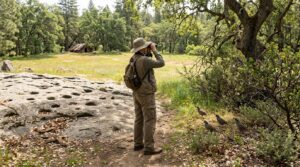 Indian Grinding Rock State Historic Park is one of the most interesting places to combine birdwatching with cultural and natural exploration. The park is located in Amador County near Pine Grove and protects an important landscape associated with the Northern Sierra Miwok.
California State Parks identifies Indian Grinding Rock as a significant historic site, while birding information from the Sacramento Audubon Society specifically recommends the park as an Amador County birdwatching location. The organization notes that species seen in the area include Turkey Vultures, California Scrub-Jays, Steller’s Jays, California Quail, Acorn Woodpeckers, Hairy Woodpeckers, Northern Flickers, Hermit Thrushes, Wild Turkeys, and California Thrashers.
Seasonal visitors may also encounter species such as Western Tanagers, Bullock’s Orioles, and hummingbirds. The combination of meadow and woodland habitats makes the park particularly interesting for people who want to observe several types of birds during one visit.
Visitors can learn more about the park’s cultural and historical significance through California State Parks information about Indian Grinding Rock.
Birdwatching Along Foothill Trails
Hiking trails provide another opportunity to observe birds in Amador County. Rather than treating birdwatching as a separate activity, visitors can incorporate it into a leisurely walk. Moving slowly and listening for calls can reveal birds that are difficult to spot at first.
Oak trees are especially valuable for many woodland species. Look for movement among branches, listen for repeated calls, and check open areas around the edges of forests. Woodpeckers may be identified by their distinctive activity on tree trunks, while jays can often be heard before they are seen.
Our guide to hiking trails in Amador County provides additional ideas for exploring the county’s outdoor landscapes while keeping an eye out for wildlife.
Birdwatching Around Lakes and Waterways
Lakes and waterways create another type of habitat for birds. Quiet shorelines can attract waterfowl, herons, and other birds that depend on aquatic environments. Even when the main purpose of a visit is fishing, boating, or relaxing near the water, it is worth taking a few minutes to scan the shoreline and nearby trees.
Early morning can be particularly enjoyable around water because the surface is often calm and bird activity can be easier to observe. A small pair of binoculars can make a significant difference when birds are on the opposite side of a lake.
For visitors interested in combining birdwatching with other outdoor activities, our guide to Amador County lakes and fishing spots provides another starting point.
Birds You May See
One of the enjoyable parts of birdwatching is never knowing exactly what you will see. Some species are relatively common, while others may require more patience or favorable seasonal conditions.
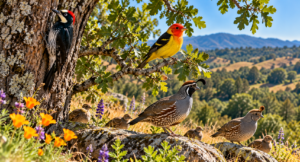
California Quail are recognizable ground-dwelling birds that may be seen around suitable foothill and woodland habitats. Acorn Woodpeckers are another interesting species, particularly because of their distinctive behavior and relationship with oak trees.
Jays are also common birds to watch for. California Scrub-Jays and Steller’s Jays can be found in different habitats, and their calls can sometimes reveal their presence before they appear in view.
Hummingbirds may be seen around flowering plants, particularly during warmer months. Raptors such as Turkey Vultures and hawks can often be spotted higher above open areas, where they use rising air currents to travel.
Birdwatching in Different Seasons
Spring can be an exciting time for birdwatching because vegetation becomes active and many birds become more noticeable. Wildflowers and fresh growth also attract insects, which can provide food for insect-eating species.
Summer brings warm weather and increased activity around woodland and meadow habitats. Sacramento Audubon specifically notes several summer species that can be seen around Indian Grinding Rock, including Western Tanagers, Bullock’s Orioles, and hummingbirds.
Fall offers another opportunity to observe seasonal changes. Migratory birds may pass through the region, while cooler temperatures can make outdoor walks more comfortable than during the hottest part of summer.
Winter can be quieter, but resident species remain active. Bare branches can sometimes make birds easier to see, particularly in woodland areas.
How to Get Started With Birdwatching
You do not need expensive equipment to begin. A basic pair of binoculars is enough for many casual birdwatching trips. A small notebook or bird identification application can also help you keep track of species you encounter.
Patience is more important than equipment. Find a quiet location, remain still for a few minutes, and listen. Bird calls can provide clues about where to look. Moving slowly also reduces the likelihood of disturbing wildlife.
It is useful to learn a few common species before your first trip. Once you can recognize familiar birds, identifying less familiar species becomes easier.
Respect Wildlife and Natural Habitats
 Responsible birdwatching helps protect the environments that make these observations possible. Birds should be watched from a respectful distance, and visitors should avoid chasing or cornering wildlife for a photograph.
Staying on designated paths is also important. Vegetation, nesting areas, and other habitat features can be easily disturbed. Keeping dogs under control and following the rules of parks and protected areas also helps reduce unnecessary impacts.
The California Department of Fish and Wildlife North Central Region provides information about wildlife viewing, ecological reserves, and wildlife management in the region.
Wildlife Conservation in Amador County
Birdwatching also provides a reason to appreciate the conservation work taking place throughout the county. The Amador Resource Conservation District works on wildlife and pollinator habitat initiatives designed to preserve and enhance Central Sierra natural habitat.
These efforts demonstrate that healthy wildlife populations depend on healthy habitats. Protecting vegetation, waterways, nesting areas, and other natural resources benefits birds as well as many other species.
Visitors can contribute by respecting public lands, following posted regulations, avoiding litter, and leaving natural areas as they find them.
The Amador Resource Conservation District’s wildlife and pollinator habitat program provides additional information about local conservation efforts.
Make Birdwatching Part of a Larger Trip
Birdwatching does not have to be the only reason for visiting Amador County. It can easily become part of a broader itinerary. A morning at a nature area can be followed by lunch in a nearby community, a historic attraction, or another outdoor activity.
Families can introduce children to birdwatching by turning it into a simple observation game. Instead of focusing on identifying every species, encourage children to notice colors, shapes, sounds, and behaviors.
Visitors interested in natural attractions can also combine birdwatching with a visit to Black Chasm Cavern. Our Black Chasm Cavern guide covers another distinctive natural experience in the county.
Planning a Birdwatching Day
A successful birdwatching outing does not need to be complicated. Choose a location, check the weather, bring water, and allow plenty of time to observe your surroundings. Early starts can be worthwhile, particularly during warmer months.
Wear comfortable clothing and shoes appropriate for the terrain. Bring binoculars if you have them, and keep a camera ready if you enjoy wildlife photography. Most importantly, give yourself enough time to slow down.
For information about specific parks, access rules, hours, and seasonal conditions, always check the official site for the destination before traveling.
Conclusion
Birdwatching in Amador County offers a peaceful way to experience the region’s natural diversity. Oak woodlands, meadows, lakes, streams, and foothill habitats create opportunities to observe a wide range of birds throughout the year.
Indian Grinding Rock State Historic Park is a particularly interesting destination because visitors can combine birdwatching with cultural and historical exploration. Other outdoor areas provide additional opportunities for watching birds near water, forests, and open landscapes.
Whether you are an experienced birder or someone who simply enjoys noticing wildlife during a walk, Amador County offers plenty of reasons to slow down and look around. A quiet morning with binoculars can reveal a completely different side of the landscape.
To discover more natural destinations and outdoor experiences, explore our Amador County attractions guide and continue exploring the county’s diverse landscapes.